Women with bleeding disorders are still navigating treatments not designed for us.
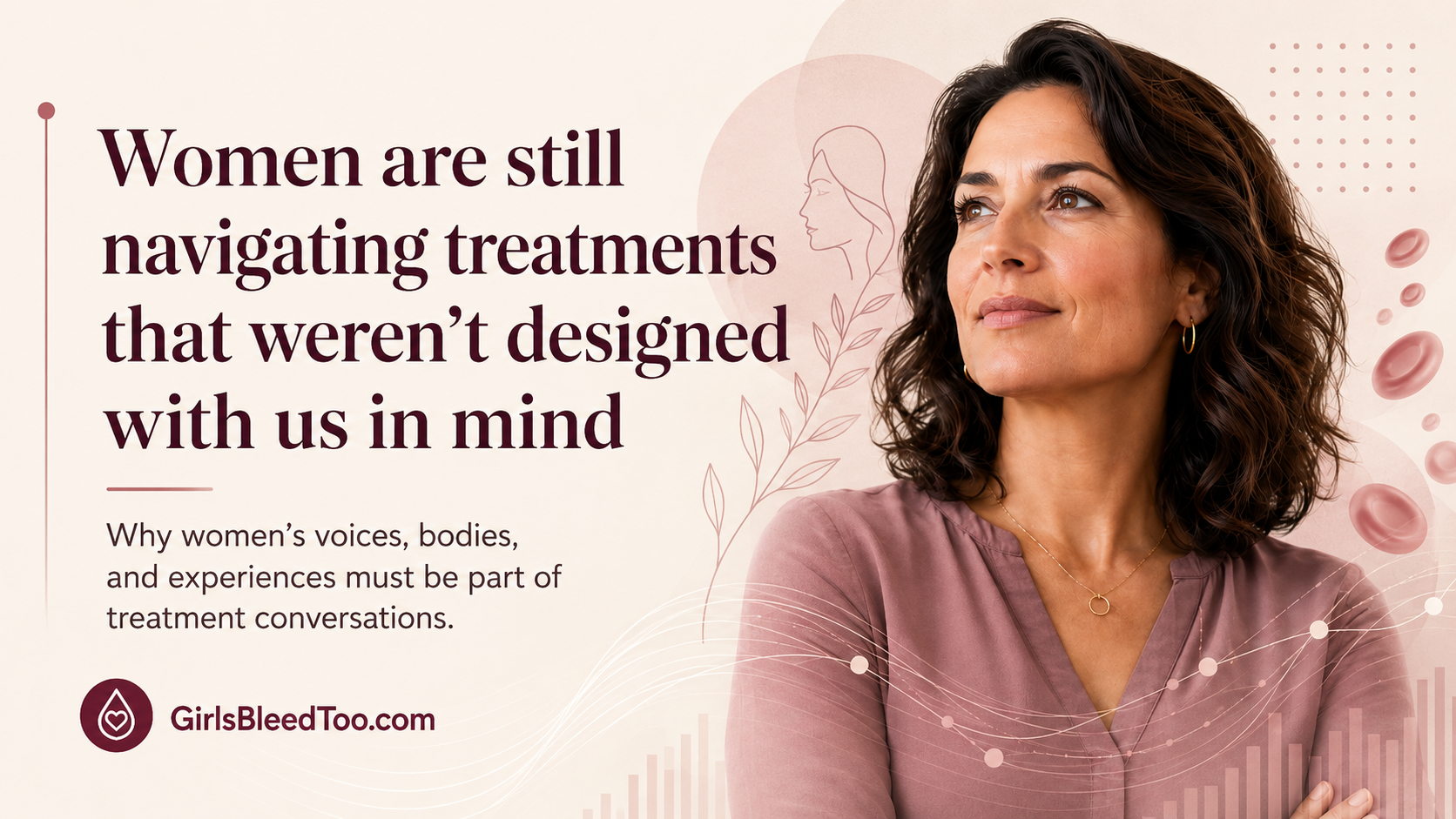
Discussing how women are underrepresented in bleeding disorders drug trials
There are events I know I should attend but talk myself out of. The Bleeding Disorders Foundation of Florida's Ladies Tea Luncheon has often been one of them — not because it isn't worthwhile, but because getting to Tampa from where I live is no small commitment. Depending on traffic, the drive can stretch anywhere from an hour and a half to three hours one way.
But something changed recently. My nephew moved to the St. Petersburg area, and suddenly that long drive had a second reason behind it. So this time I went — and I'm glad I did. The luncheon featured my own hematologist presenting on new treatments for bleeding disorders and how they apply specifically to women.
Here's the thing: women are historically underrepresented in drug trials for bleeding disorders. When new therapies are developed, trials typically begin with more severe cases first — and in the bleeding disorders world, that almost always means men...
Key Takeaways
Women and girls remain underrepresented in bleeding disorders clinical trials.
This lack of representation can lead to treatment gaps, dosing challenges, and unintended risks.
Women-centered research and data are essential for safer, more effective care.
Our voices, bodies, and experiences must shape the future of treatment conversations.
Continue reading
This column was originally published in full on Hemophilia News Today by BioNews, Inc.
Jennifer writes a weekly column, “Hemophilia and Me,” exploring life as a woman with hemophilia B and von Willebrand disease.