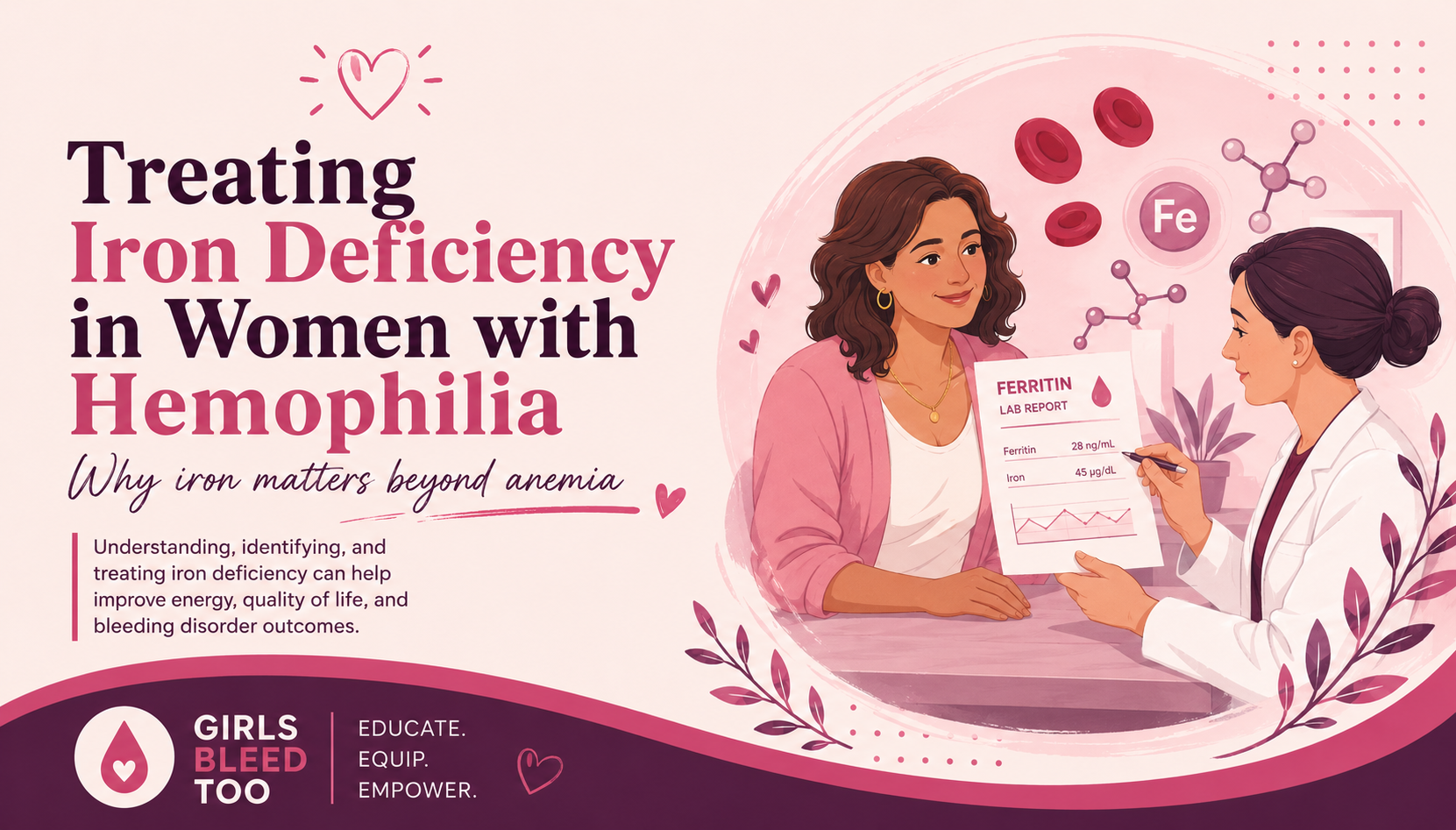
Treating iron deficiency in women with hemophilia
Heavy periods & your health
Iron doesn't
come backon its own.
If you bleed heavily every month, you are losing iron every month. Here is what to test, what number to ask for, and what to do when "your labs look fine" doesn't match how you feel.
The number to ask for is ferritin
Ferritin is the protein that stores iron in your body. It drops long before hemoglobin does — which is why you can be exhausted and still be told you aren't anemic.
Why the gap matters: a ferritin of 22 can print as "normal" on your results page and still leave you dragging. Ask for the actual number, not just whether it was flagged. Then ask your provider what target is right for you.
Hemophilia doesn't cause iron deficiency. Heavy bleeding does.
A bleeding disorder doesn't drain iron by itself — the blood loss does. For women and girls, the biggest and most repeated source of that loss is menstruation, month after month, for decades.
That's why women with hemophilia, von Willebrand disease, platelet disorders, and rare factor deficiencies run low on iron far more often than men with the same diagnoses. It's also why iron status is a fair way to judge whether treatment is actually working. If your bleeding is being managed well, your iron should be able to recover. If your ferritin keeps falling, that's information about your treatment plan, not just your diet.
What low iron actually feels like
These get explained away as stress, poor sleep, or "just being busy." Together, they're worth a lab slip.
Take these to your appointment ”
- Can we check my ferritin, not just a CBC?
- What was my actual ferritin number, and what target should I aim for?
- How often should this be rechecked — could we set a standing lab order?
- If oral iron hasn't worked or I can't tolerate it, am I a candidate for IV iron?
- Is my iron staying low because my bleeding disorder treatment needs adjusting?
Ways iron gets replaced
Your hematologist decides what fits your situation. Knowing the options makes the conversation easier.
From our founder's column
"Treating iron deficiency in women with hemophilia"
Jennifer writes about years of being told her anemia was expected and inconsequential, the iron pills that never moved the needle, and the infusions at 54 that finally did — plus what a hematologist's talk on ferritin changed about how she tracks her own labs.
Read the full column at Hemophilia News Today →Girls Bleed Too provides educational resources and community support. This information is not a substitute for medical advice. Always consult a qualified healthcare provider about diagnosis, treatment, and care decisions.