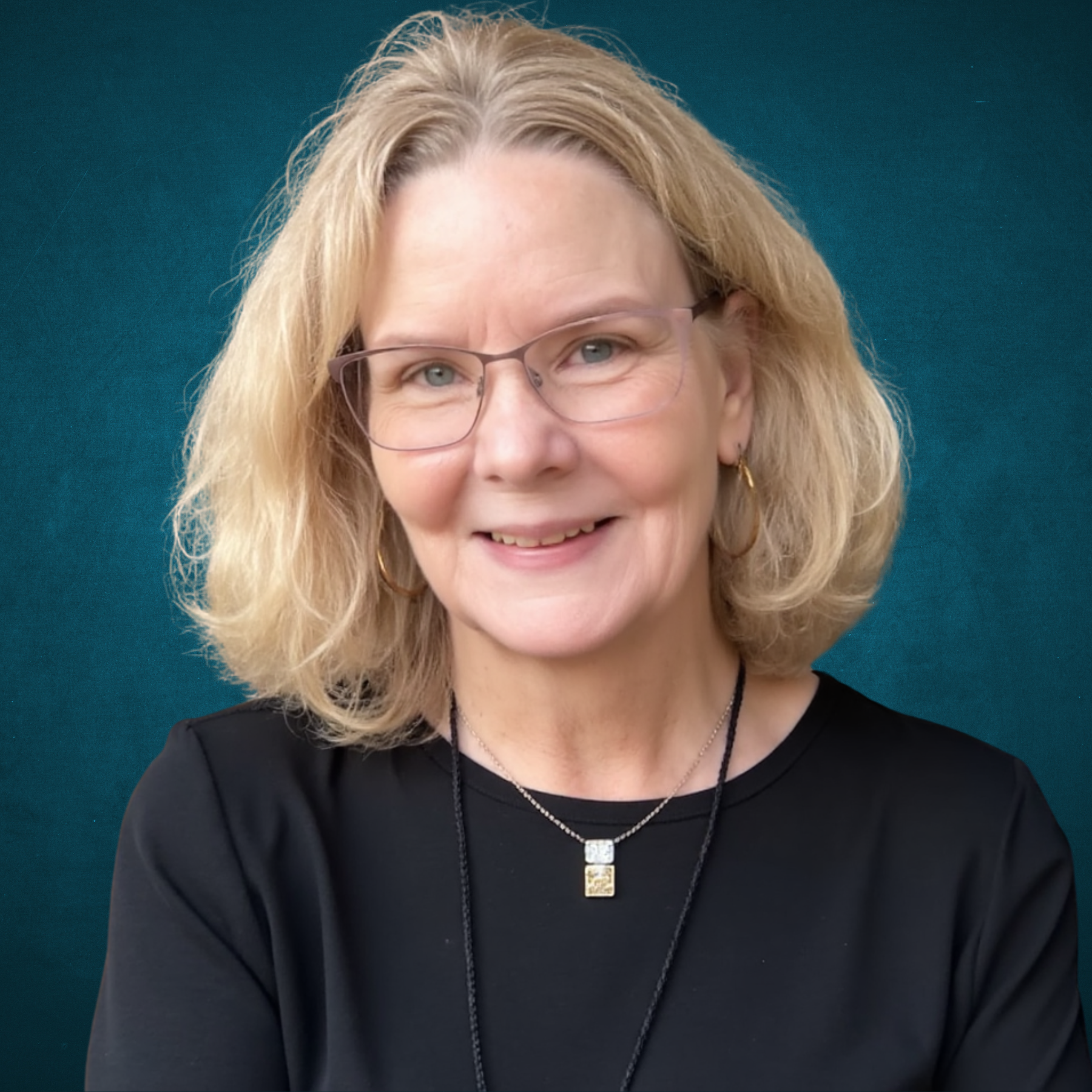
Discussing platelet disorders with advocate Jeanette Kizer
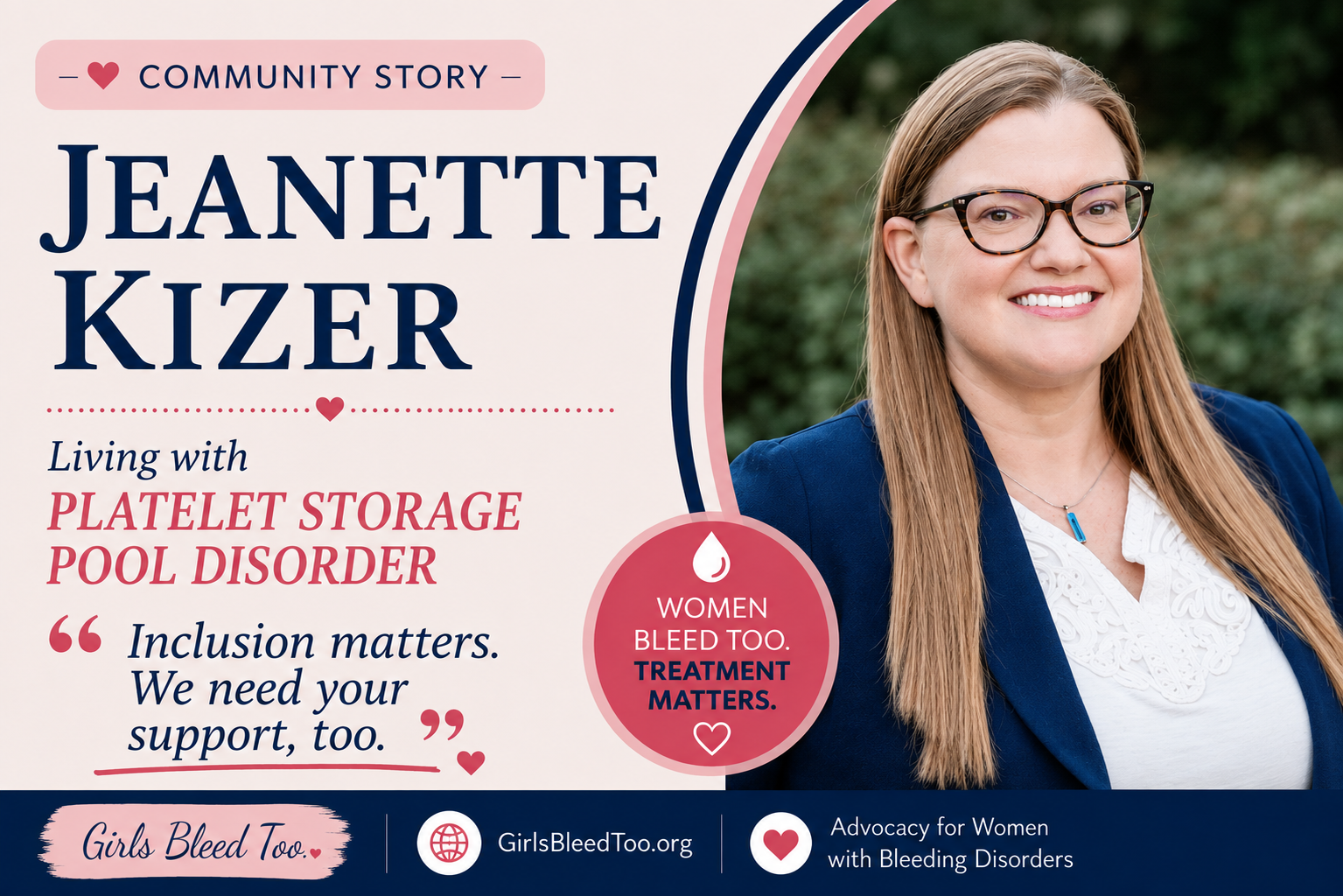
Here's why inclusion matters in the bleeding disorders community
For most people, "bleeding disorder" means hemophilia — factor levels, infusions, joint bleeds. Platelet disorders rarely make it into that picture, even though they can be just as disruptive and just as hard to get diagnosed. Jeanette Kizer knows that gap firsthand.
It took Jeanette until her 30s to get any answer for the heavy bleeding she'd lived with her whole life, and years more before doctors connected her antiphospholipid syndrome diagnosis to a separate, underlying platelet dense granule deficiency. Along the way, she carried two pregnancies through preeclampsia and postpartum hemorrhaging, and eventually watched her own children begin the same diagnostic journey.
Her story lines up with what we hear again and again at Girls Bleed Too: platelet disorders are under diagnosed, under-researched, and often left out of the room when "bleeding disorders" gets discussed. We're sharing her interview with journalist Jennifer Lynne, originally published on Hemophilia News Today, because her advocacy for inclusion — of platelet patients, and of women whose bleeding gets dismissed for years — is exactly the work this community needs more of.
In 2024, I had the privilege of connecting with Jeanette Kizer, a former education manager at the Hemophilia Federation of America. During our conversation, she graciously guided me through a period tracker toolkit that she played a pivotal role in developing. Jeanette is a passionate advocate for women in the bleeding disorders community.
To mark Bleeding Disorders Awareness Month this March, I had a series of conversations with her via Zoom and email to delve deeper into her experience. Excerpts from our discussions follow.
A Decade of Unanswered Bleeding
Jeanette lives with a platelet storage pool disorder — specifically, platelet dense (delta) granule deficiency. It behaves like most bleeding disorders, she says, but tends to bring more mucosal bleeding for her and her family. Her son was diagnosed in 2023; her daughter is currently going through referrals and testing.
For most of her early life, though, she had no name for what was happening to her.
"I was experiencing bleeding and had no idea it was related to a bleeding disorder. I'd never even heard of that before."
She was first diagnosed in 2016 with antiphospholipid syndrome (APS) after experiencing multiple miscarriages. That diagnosis explained some of her bleeding symptoms — but not all of them. It wasn't until a family member's test results pointed her doctors toward further investigation that her platelet deficiency was officially identified, in 2021.
The years in between took a toll. The miscarriages caused significant damage to her mental health, and when she was finally able to carry to full term, both deliveries were frightening — she experienced preeclampsia and postpartum hemorrhaging. She also lived with unsupported heavy menstrual bleeding well into her 30s — an experience that now fuels her advocacy work.
Living With It, Day to Day
Bleeding disrupts Jeanette's life and plans regularly — nosebleeds, heavy menstruation, and the ongoing work of caregiving all add stress. When emergencies happen, her family relies on the local ER, and then spends time educating the providers on-site about their condition.
With kids in the picture, staying calm matters more than ever.
"Three years ago, my son busted his head open and had to get three staples. It was a horrifying experience, and I wish I had had better control over my emotions because I'm sure my reaction scared him more."
Managing Treatment — Without a Replacement Product
Because people with this type of platelet deficiency don't have a replacement product available, emergencies are harder to navigate. Jeanette relies on a toolkit of aids instead: antifibrinolytics (clot-promoting medicines), BleedStop powder, hydrocolloid bandages, nose plugs, and saline gel to keep noses moist.
She's candid about what's missing: more research funding to develop real replacement therapies.
"The sad truth is that drug development is driven by profit. A little more than 3,600 people are similar to me, which is not an attractive number for profit margins. It's a frustrating and sad reality."
How She Navigates Appointments
Jeanette and her family have built a system for medical visits:
A list of questions or concerns, prepared ahead of time
Comfortable clothing for movement assessments
Snacks and drinks, in anticipation of blood draws
Comfort items to help with anxiety and pain
Bleeding records sent ahead when possible, and brought along as backup
Notes taken during the appointment — there's always more information than you can hold in your head
Her Advice for the Newly Diagnosed
"Learn everything you can about your disorder — and as much as you can about the others. You need to become the expert of you, and be prepared to educate others and advocate. Get involved! The community is the best resource for you. They are living it and know exactly what you are going through. You will need a support system, and they need you, too."
Why Inclusion Matters
Jeanette wants people to know there's a growing community of platelet disorder patients ready to share their experiences — and still fighting for better care and treatment options.
"When you talk about bleeding disorders and say only hemophilia, we notice. Inclusion matters, and we are thankful for the massive strides at the national level. Platelet people have been supporting the community's majority since the beginning. We need your support, too."
If Jeanette's story resonates, our provider directory and heavy periods resources may help you take the next step toward a diagnosis.