Women Can Have Hemophilia, Too
Originally published on Hemophilia News Today by BioNews, Inc.
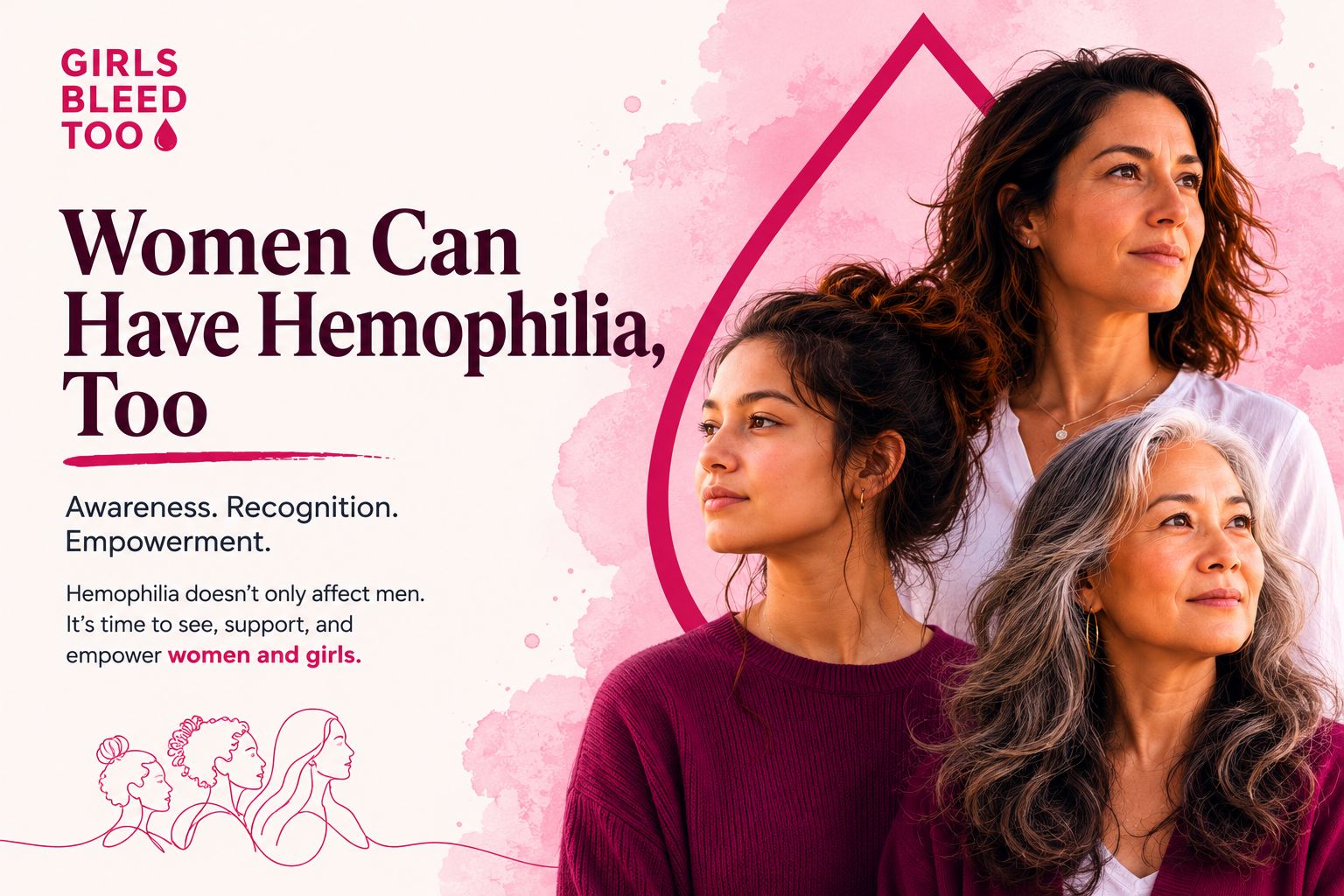
Why the medical community's blind spot about hemophilia in women can be dangerous — and what to do when a doctor doesn't believe you.
Imagine you're in an emergency room with a life-threatening bleeding problem. You know what's happening to your body. You know what treatment you need. But the doctor across from you doesn't believe women can have hemophilia — so they hesitate, question you, or dismiss you entirely.
This isn't hypothetical. It has happened to me and to countless women in this community. I have both von Willebrand disease and hemophilia B. When I walk into an ER, I've learned to say "I have a bleeding disorder" rather than "I have hemophilia" — because the second phrase can stop a provider cold. The assumption that hemophilia only affects men is so deeply embedded in medical training that simply naming my diagnosis can create a barrier to care.
That has to change. And it starts with understanding why the myth persists, what the data actually says, and how to advocate for yourself when you're faced with a provider who hasn't caught up.
Key Takeaways
Women can and do have hemophilia — the assumption that it only affects men is medically outdated.
The belief that women are only carriers, not patients, leads to delayed diagnosis and inadequate care.
Knowing how to communicate your diagnosis in a medical setting can be a safety skill.
Awareness and advocacy are the tools that change the system over time.