
Obstetric and Gynaecologic Considerations in Inherited Bleeding Disorders
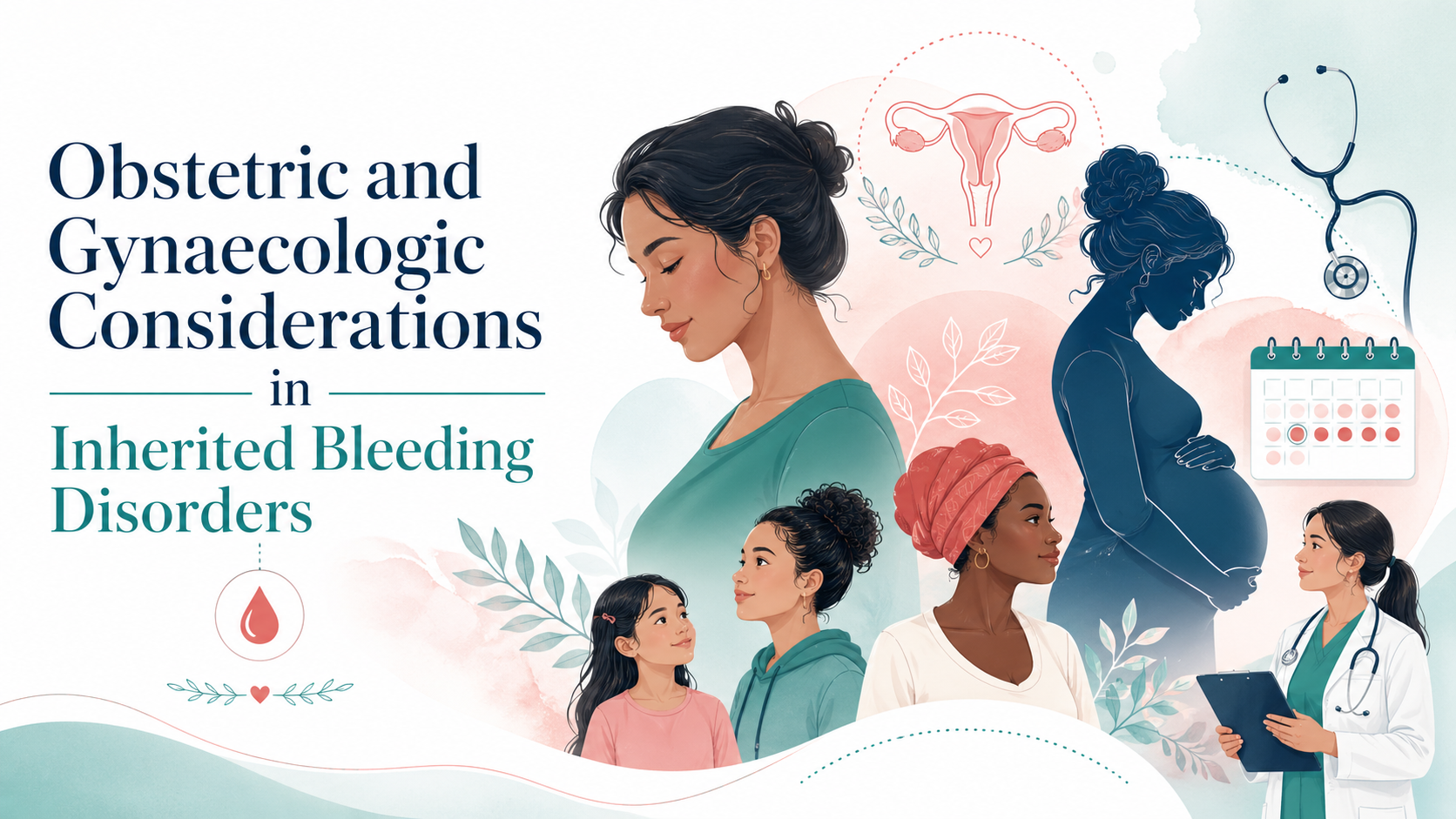
Article Synopsis: Obstetric and Gynaecologic Considerations in Inherited Bleeding Disorders
Women and girls with inherited bleeding disorders face unique health challenges across their lifespan, especially during menstruation, fertility treatment, pregnancy, delivery, postpartum recovery, and menopause. This review article highlights the need for individualized, multidisciplinary care involving hematologists, gynecologists, obstetricians, anesthesiologists, genetic counselors, and other specialists.
A central focus of the article is heavy menstrual bleeding, which is often normalized or overlooked despite being one of the most common symptoms in women and girls with inherited bleeding disorders. The authors emphasize that better recognition, screening, and treatment can help reduce complications such as iron deficiency, anemia, and diminished quality of life.
The article also discusses reproductive planning, including fertility, genetic counseling, prenatal diagnosis, and pregnancy management. While conditions such as von Willebrand disease and hemophilia carrier status may not necessarily impair fertility, some factor deficiencies are associated with increased risks during pregnancy, including miscarriage, antepartum hemorrhage, and postpartum hemorrhage. Careful planning before and during pregnancy is essential.
Delivery planning is another major theme. The authors stress the importance of assessing bleeding risk for both the mother and baby, determining whether neuraxial anesthesia is appropriate, and creating a delivery plan in advance. Postpartum hemorrhage remains a significant concern, particularly for women with von Willebrand disease, hemophilia carrier status, platelet function disorders, and certain rare factor deficiencies.
The review also addresses the long history of under-recognition of women and girls with hemophilia and symptomatic carrier status. It calls for improved screening, education, access to genetic testing, and greater awareness that women and girls can experience clinically significant bleeding even when they have historically been labeled only as “carriers.”
Overall, the article reinforces the importance of proactive diagnosis, personalized care plans, and lifelong support for women and girls with inherited bleeding disorders. It underscores that better recognition and treatment can reduce maternal and fetal complications, improve reproductive health outcomes, and support safer, healthier lives.
The key to making things happen isn’t waiting for the perfect moment; it’s starting with what you have, where you are. Big goals can feel overwhelming when viewed all at once, but momentum builds through small, consistent action. Whether you’re working toward a personal milestone or a professional dream, progress comes from showing up — not perfectly, but persistently. Action creates clarity, and over time, those steps forward add up to something real.
You don’t need to be fearless to reach your goals, you just need to be willing. Willing to try, willing to learn, and willing to believe that you’re capable of more than you know. The road may not always be smooth, but growth rarely is. What matters most is that you keep going, keep learning, and keep believing in the version of yourself you’re becoming.